When most people picture "eco-friendly drainage," they think of green roofs and rainwater harvesting tanks, the kind of features you see on new commercial buildings or sustainability case studies. Those matters.
But for the average London homeowner or property manager, the greener choices are smaller, more practical, and start with how your existing drains are cleaned and maintained.
This guide covers the full picture: the small everyday choices that add up, the bigger sustainable drainage solutions worth considering for your property, and what regulations actually require in London. The goal is practical, eco-friendly drainage you can act on, not a sustainability lecture.
What "Eco-Friendly Drainage" Actually Means in a London Context
In a city as dense as London, drainage isn't just about getting water away from your property. It's about reducing what enters the public sewer network during heavy rain, preventing pollutants from reaching the Thames, and not making the urban heat island worse with hard non-permeable surfaces.
Eco-friendly drainage covers four broad areas:
How your drains are cleaned and maintained, which determines what chemicals end up in waterways. How surface water is managed on your property, which affects flooding risk. How rainwater is captured and reused, which reduces demand on treated mains water. And how repairs are carried out, which determines how much disruption and material waste a drainage job creates.
Each one has practical homeowner-level options and larger commercial or development-scale options. Most properties benefit from focusing on the first one before tackling the others.
Greener Drain Cleaning: Why How Your Drains Are Cleaned Matters
This is the single biggest eco-friendly drainage decision most property owners actually make, even if they don't think of it that way.
The problem with chemical drain cleaners
Supermarket drain cleaners work by dissolving organic matter with strong alkalis or acids. The active ingredients don't disappear when they enter your drain. They flow into the public sewer, then into the wider water network, where they require additional treatment to neutralise. Repeated use also damages older pipework, particularly cast iron and clay, accelerating corrosion and shortening the life of your drainage system.
For period properties with original Victorian or Edwardian pipework, regular use of chemical drain cleaners is a leading cause of premature pipe failure.
High-pressure water jetting as a chemical-free alternative
Eco-friendly drain cleaning uses high-pressure water rather than chemicals. A trained operator directs water through specialised nozzles to remove grease, scale, silt, and debris from inside the pipework. The only thing entering the drainage system is water and the dislodged buildup, which is captured and disposed of through licensed waste routes.
Jetting is more effective than chemical cleaners on serious blockages, doesn't damage older pipework when done at the correct pressure, and leaves no chemical residue to enter the wider water network.
Biodegradable and enzyme-based drain treatments
For routine maintenance between professional cleans, biodegradable enzyme treatments offer a greener alternative to chemical drain cleaners. They use bacterial cultures or enzymes to break down organic waste — grease, food particles, soap residue — without the harsh chemistry. They work more slowly than chemical cleaners, which means they're better suited to ongoing maintenance than emergency unblocking.
Used monthly, an enzyme treatment helps prevent the kind of slow buildup that turns into a serious blockage six months later.
Sustainable Drainage Solutions (SuDS) for London Properties
SuDS is the umbrella term for drainage features designed to mimic how water moves through natural landscapes, slowing it down, letting it soak in, and reducing the volume hitting conventional drains during heavy rain. London has been progressively encouraging SuDS in new developments and major renovations.
Permeable paving for driveways and patios
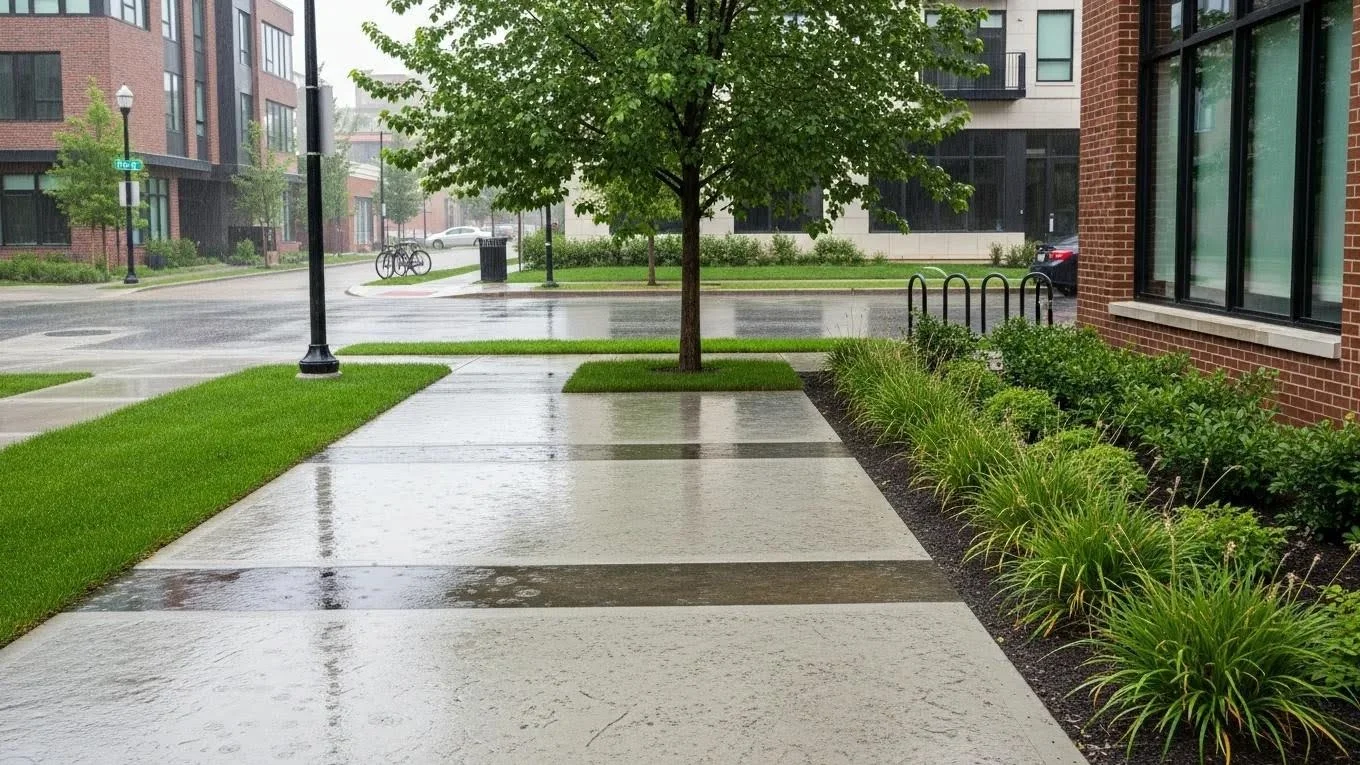
This is the most common SuDS feature on residential properties. Permeable paving uses porous materials — permeable concrete, porous asphalt, or block paving with gravel-filled gaps — that let rainwater pass through the surface into the ground below, rather than running off into the road and the public drain.
For homeowners replacing a driveway or patio, choosing permeable materials adds a small premium to the cost but reduces flooding risk on your property and avoids the planning requirements that apply to non-permeable front gardens above 5 square metres.
Rain gardens and planted drainage features
A rain garden is a shallow planted depression designed to collect rainwater from gutters or downspouts and let it soak slowly into the ground. They cost very little to install, support local biodiversity, and visibly improve a garden's appearance. For London properties with limited space, even a small rain garden under a downspout makes a measurable difference.
Green roofs
Green roofs cover a building's roof with vegetation that absorbs rainfall before it enters the drainage system. They reduce runoff, insulate the building, and lower the urban heat island effect. The installation cost is high, which is why green roofs are more common on commercial buildings and new developments than retrofits of older homes — but for the right property, they're one of the most impactful SuDS options available.
Rainwater Harvesting for London Homes and Businesses
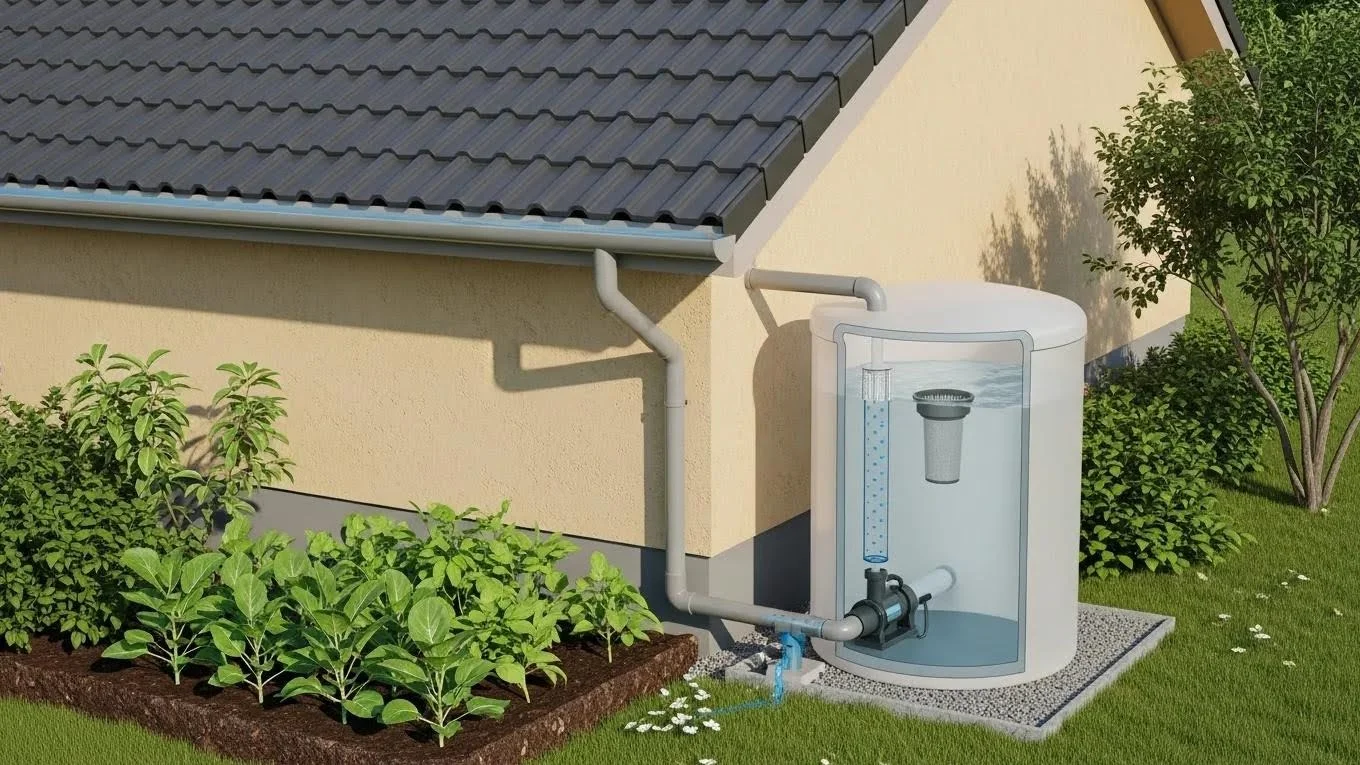
Rainwater harvesting collects rain from roofs and stores it for non-drinking uses — irrigation, toilet flushing, cleaning, washing cars. For homeowners, the simplest version is a water butt connected to a downspout. For commercial properties or larger homes, an underground tank with a filtration system can supply a meaningful portion of non-potable water demand.
The economics depend on usage. A garden-only system pays back slowly. A larger system supplying toilets and outdoor cleaning pays back faster, especially for commercial sites with high water bills. The environmental case is clearer than the financial one — every litre of harvested rainwater is a litre that didn't need to be treated and pumped from the mains.
Whichever system you install, regular gutter cleaning and maintenance is essential. Blocked gutters mean rainwater overflows before it reaches your collection system, defeating the point.
No-Dig Repair Methods That Cut Environmental Disruption
When drains do need fixing, the repair method matters environmentally. Traditional excavation involves digging up gardens, drives, or pavements; disturbing soil and tree roots; using new materials for reinstatement; and generating significant construction waste.
No-dig repair methods avoid most of this. Drain relining inserts a resin-soaked liner into the existing pipe, which cures in place to form a new pipe inside the old one. No excavation, no disturbance, much less waste.
The first step is always a CCTV drain survey to confirm whether no-dig repair is suitable. Most damaged drains can be relined or patch-repaired without digging — but full collapses still require excavation. A drainage company that defaults to excavation without considering relining isn't operating to current standards.
What London Regulations Say About Sustainable Drainage
London's planning framework increasingly favours sustainable drainage. The London Plan sets a drainage hierarchy that prioritises infiltration, rainwater harvesting, and SuDS features over discharge to the combined sewer. Lead Local Flood Authorities at borough level review drainage strategies for major developments.
For homeowners, the most relevant regulation is the planning rule on front garden surfaces: laying impermeable hard surfaces over 5 square metres in a front garden requires planning permission, but permeable surfaces don't. This actively pushes households toward greener choices.
Building Regulations Part H governs drainage and waste disposal in new builds and significant alterations, including provisions for surface water management. For commercial sites, trade effluent consents from Thames Water set limits on what can enter the public sewer.
What Are Effective Permeable Paving Solutions For London Properties?
Permeable paving allows water to pass through the surface, helping reduce runoff and support groundwater recharge. These solutions are especially useful in urban settings where impermeable surfaces can worsen flooding and water pollution.
Permeable Paving For Improved Drainage And Reduced Surface Runoff
Permeable paving can improve drainage by letting rainwater infiltrate the surface and reach the underlying soil. This can lower the volume flowing into storm drains and reduce flood risk.
Materials such as permeable concrete and porous asphalt are commonly used in driveways and car parks to manage stormwater. Well-designed SuDS can help manage runoff and water quality where permeable paving is suitable.
Installation And Maintenance Best Practices For Permeable Surfaces
Successful permeable paving installation depends on proper planning, suitable materials, and careful ground preparation. The subgrade must be stable enough to support expected loads, while the drainage layers should allow rainwater to pass through and disperse safely.
Using the right surface material also helps prevent early damage, ponding, or poor water movement. Regular maintenance is just as important after installation. Sweeping, vacuum cleaning, and removing leaves, dirt, and sediment help stop the pores from becoming blocked.
How Can Eco-Friendly Drainage Maintenance Support Long-Term System Performance?
Regular maintenance is vital to keep eco-friendly drainage systems effective and durable. Scheduled checks and cleaning help prevent blockages and keep components performing as designed. This can reduce the need for major repairs and support service life.
Role Of Biodegradable Drain Treatments
- Eco-Friendly Choice: Biodegradable drain treatments provide a safer alternative to harsh chemical cleaners.
- Organic Waste Breakdown: They help break down grease, food particles, soap residue, and other organic matter.
- Reduced Blockages: Regular use can help prevent minor clogs from turning into serious drainage problems.
- Microbial Support: Some enzyme or bacterial treatments support natural waste breakdown in drains.
- Safer System Care: Used correctly, they can support drain performance while reducing reliance on harsh chemical cleaners.
Influence Of London Drainage Regulations On Eco-Friendly Maintenance Practices
- Stormwater Management: London planning guidance supports sustainable drainage strategies for managing rainwater safely and reducing flood risk.
- Regular Inspections: Routine checks help identify blockages, damage, or poor drainage before problems worsen.
- Eco-Friendly Treatments: Biodegradable products support drain maintenance without relying on harsh chemicals.
- Property Compliance: Following drainage rules helps property owners meet local and environmental requirements.
- Urban Environmental Health: Sustainable drainage practices help protect waterways, reduce pollution, and support cleaner city living.
How to Choose a Drainage Company That Works Sustainably
Most drainage companies will say they work sustainably. The differences show up in practice.
Cleaning methods: Do they use jetting and enzyme treatments by default, or chemical cleaners? Ask before booking.
Repair approach: Do they recommend relining and patch repairs where suitable, or default to excavation? A company that always wants to dig isn't working sustainably or efficiently.
Waste handling: Where does the silt and debris from jetting end up? Reputable contractors dispose of waste through licensed routes and can show paperwork.
Inspection-first approach: Do they survey before they quote? A CCTV survey adds a small upfront cost but prevents over-quoted excavation jobs.
Environ Drainage Services operates across London using CCTV-led diagnosis, jetting and enzyme treatments for cleaning, and no-dig repair methods where pipework allows. The full service range covers cleaning, surveys, repairs, and emergency work, all with the same approach to minimising chemical use and excavation disruption.
Why Choose Environ Drainage Services For Drainage Support In London?
At Environ Drainage Services, we provide drainage services in London for residential and commercial properties. Our expert team has experience with London drainage systems, including the city’s old and modern infrastructure.
We use environmentally friendly procedures, as stated on our site, including CCTV inspections that reduce the need for extensive digging. Our drain maintenance services include routine checks, cleaning, restoration, and CCTV surveys. These can help reduce blockages and future disruption.
At Environ Drainage Services, we believe that effective drainage is more than just infrastructure. It can support safer, more resilient urban spaces. Contact us today to learn how our drain cleaning, CCTV surveys, repairs, and maintenance services can meet your specific needs.
Frequently Asked Questions
What's the easiest eco-friendly drainage change a homeowner can make?
Switch from chemical drain cleaners to an enzyme-based monthly treatment, and have your drains professionally jetted once a year instead of waiting for a blockage. These two changes alone reduce chemical discharge, extend the life of your pipework, and cost less over time than emergency unblocking call-outs.
Are permeable driveways more expensive than standard ones?
The premium is usually 10 to 25 per cent depending on the material. Permeable concrete and resin-bound gravel cost a little more than standard concrete or block paving. The trade-off is that permeable surfaces don't require planning permission for fronts over 5 square metres, which standard impermeable surfaces do.
Does rainwater harvesting actually save money in London?
For garden-only use, the payback period is long — usually 10 years or more. For systems supplying toilet flushing and outdoor cleaning, payback is faster. The financial case is strongest for commercial properties with high water bills. The environmental case is consistent regardless of property size.
Are biodegradable drain treatments effective on serious blockages?
No. Enzyme and bacterial treatments work slowly and are designed for ongoing maintenance, not emergency unblocking. For a serious blockage, professional jetting clears the obstruction quickly without the chemical impact of supermarket drain cleaners. Use enzymes monthly to prevent buildup; use jetting when buildup has already happened.
Will eco-friendly drainage repairs comply with my insurance and Building Regulations?
Yes, when carried out by a competent contractor. Drain relining, patch repairs, and jetting all meet UK industry standards (BS EN 13508 for surveys, WRc condition coding for repairs) and are accepted by insurers. The repair method matters for environmental impact; the standard the work is carried out to determines whether it's compliant.
What about emergency drainage situations — is eco-friendly still the priority?
In a genuine emergency — sewage backing up, severe flooding — the immediate priority is fixing the problem safely. The good news is that the fastest professional response (jetting and CCTV survey) is also the more sustainable one. Chemical drain cleaners aren't faster than jetting; they're just cheaper for the contractor.