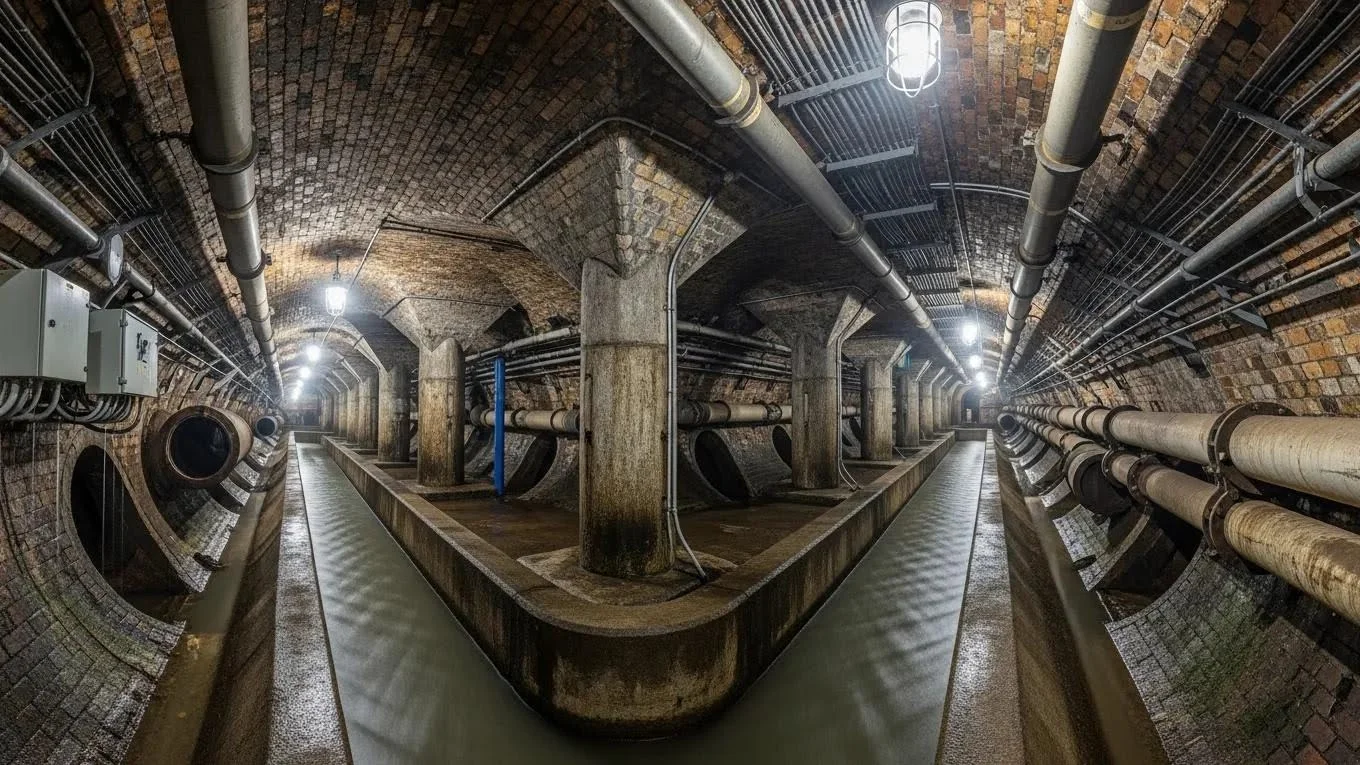
London's sewer network is a vast and intricate system that handles the city's wastewater, essential for urban health and safety. Today, this guide provides a focused overview of the sewer infrastructure, its challenges, and effective drainage management solutions.
It explores key features and issues caused by urban growth and climate impacts. It also explains how professional drainage services can help reduce flooding and pollution risks for London properties.
What You Need To Know About London's Sewer Network
London's sewer network, extensive and historically significant, includes many combined sewers that manage both sewage and stormwater. This design can cause capacity problems during heavy rain.
Many components date to the Victorian era, reflecting city expansion. These ageing parts need regular inspection and refurbishment to maintain safety and functionality.
London's Sewer Infrastructure Structure And Maintenance
The sewer system is a complex arrangement of pipes, treatment sites, and pumping stations managed chiefly by Thames Water Utilities alongside other agencies. Routine inspections are vital to catch potential issues early.
The incorporation of smart technologies enables real-time data gathering and monitoring, enhancing maintenance efficiency and overall system reliability.
Unique Challenges Faced By London's Sewer System
The sewer system grapples with ageing infrastructure combined with climate change impacts, such as increased heavy rainfall events causing combined sewer overflows.
These overflows may release untreated sewage into the Thames, while urban flooding threatens properties and public health. Pollution and infrastructure strain demand innovative and adaptive management solutions.
Recognize The Common Drainage Problems That Could Affect Your London Property
London properties frequently face drainage issues like blocked drains, pipe damage, and flooding. Blockages arise from debris, tree root intrusions, or fatbergs, large accumulations of congealed fat and waste.
Damaged pipes cause symptoms such as slow drainage, odors, and leaks, escalating into serious problems if ignored. Flooding occurs when heavy rain exceeds sewer capacity, affecting homes and businesses alike.
Causes Of Blocked Drains And Sewer Blockages In London
Blockages can result from ageing pipes, waste build-up, and environmental factors. Old pipes are vulnerable to damage and obstruction.
Debris accumulation from grease, hair, and rubbish steadily restricts flow. Tree roots penetrating pipes further exacerbate blockages and structural damage, complicating repairs and system function.
Impacts Of Drainage Issues On Residential And Commercial Properties
Drainage problems pose health risks through sewage exposure and disease spread, and financial costs from repairs and reduced property values. Prompt professional intervention is critical.
Services such as Environ Drainage Services offer CCTV drain surveys, drain unblocking, drain repairs, drain cleaning, and maintenance. These services are for homeowners, landlords, property managers, and businesses.
See How Sewer Inspection and CCTV Technology Can Help You Maintain Your Drains
CCTV sewer inspection supports maintenance by enabling non-intrusive pipe checks, often without excavation. This technology allows early issue detection, cost savings by preventing major failures, and improves drainage system reliability and lifespan.
Benefits of CCTV Sewer Inspections In London
CCTV inspection minimizes property disruption, provides detailed condition reports, and helps identify problems early to avoid costly repairs, boosting maintenance effectiveness and sewer sustainability.
Advanced Inspection Methods For Detecting And Diagnosing Drainage Problems
Beyond CCTV, advanced methods like sonar and laser profiling deliver precise diagnostics for targeted upkeep. These technologies reduce inspection time and resources compared to traditional methods, improving drainage system care.
Explore The Drainage Repair And Maintenance Services Available To You In London
London offers extensive drainage repair and maintenance options, including routine inspections, professional unblocking, and emergency repairs to minimize damage and health risks.
Environ Drainage Services provides drain unblocking, drain repairs, CCTV drain surveys, drain cleaning, maintenance, and emergency drainage services across London.
Approach Of Expert Drainage Repair Services To Blocked Drains And Sewer Damage
Experts follow a structured process beginning with a thorough diagnosis. They then choose repair methods based on the severity of the damage. Preventative maintenance helps support long-term system health.
Best Practices For Ongoing Sewer Maintenance In London
Effective sewer maintenance relies on regular inspections and cleaning, public education to promote proper waste disposal, and adoption of smart monitoring technologies to support proactive system management and resilience.
Know What Your Responsibilities Are As A Landlord Or Tenant For Drainage
Property owners, including landlords, usually maintain private drains within the property boundary, ensuring their proper function and meeting relevant responsibilities.
The maintenance of lateral drains, those connecting private drains to the public sewer, is usually the sewerage company’s responsibility in London. Their role is critical in safeguarding community health, preventing pollution, and ensuring the smooth functioning of the city's infrastructure.
Division Of Drainage Maintenance Duties Between Landlords And Tenants
Typically, landlords bear the responsibility of conducting repairs and inspections on private drains within the property boundary to ensure they remain in good condition.
The maintenance of lateral drains is usually handled by the sewerage company once they connect to the public sewer. Clear communication between landlords and tenants about responsibilities helps in the quick identification and resolution of drainage problems.
Scheduling Sewer Inspections And Repairs For Rental Properties
Routine sewer inspections are recommended at least annually for rental properties to proactively identify minor issues before they escalate into costly repairs or cause health hazards.
Immediate inspections and prompt repairs are crucial when tenants report symptoms such as slow drainage, unpleasant odors, or visible leaks.
Be Prepared With Emergency Drainage Solutions To Protect Your Property And Safety
Emergency drainage responses play a vital role in rapidly addressing failures within the sewer system, effectively limiting property damage, health risks, and environmental consequences. Rapid intervention is crucial during unexpected blockages, pipe bursts, or flooding incidents caused by system overloads or infrastructure failure.
Recommended Immediate Actions For Drainage Emergencies In London
In the event of a drainage emergency, it is advisable to immediately cease all water usage within the affected property to prevent exacerbation of blockages or flooding.
Providing detailed information about the nature of the problem, observed symptoms, and any relevant context aids professionals in diagnosing and resolving the issue swiftly.
Role Of Rapid Response Services In Mitigating Sewer Network Failures
Specialized rapid response teams offer crucial support in mitigating damage and reducing repair costs associated with sudden sewer network failures. Utilizing advanced technology and adhering to well-established emergency protocols, these teams ensure fast, coordinated interventions that prioritize safety, minimize disruption to residents and businesses, and maintain overall system integrity.
Why Choose Environ Drainage Services
At Environ Drainage Services, we specialize in comprehensive drainage solutions tailored to meet the unique challenges faced by London properties. Our team provides CCTV drain surveys, drain unblocking, repairs, and maintenance to help keep drainage systems working efficiently.
We understand the complexity and historical aspects of London's sewer network. At Environ Drainage Services, we combine specialist drainage knowledge with the latest technology for proactive and reactive drainage support.
At Environ Drainage Services, we believe in fostering clear communication and partnership with our clients to help keep drainage systems functional and easier to maintain.
Frequently Asked Questions
What should I do if I suspect a drainage issue in my property?
If you suspect a drainage problem, such as slow drainage or unpleasant odors, it's important to take action immediately. First, refrain from using any water in the affected area to prevent exacerbation. Then, assess any visible signs like leaks or blockages. Contact a professional drainage service for an inspection, as early diagnosis can prevent more serious issues and costly repairs.
How often should sewer inspections be conducted?
It is recommended to have sewer inspections conducted at least once a year, especially in older properties or those prone to drainage issues. Annual inspections allow for early detection of potential problems such as blockages, leaks, or pipe damage, helping to avoid major issues later on.
What are fatbergs, and how do they affect the sewer system?
Fatbergs are large masses of congealed fat, oils, and non-biodegradable materials that accumulate in the sewer system, leading to significant blockages. They disrupt the normal flow of wastewater, which can cause sewage backups and overflows, posing serious health hazards and environmental risks.
How does rain impact London's drainage system?
Heavy rainfall can overwhelm London's drainage system, particularly the combined sewers that handle both sewage and stormwater. When capacity is exceeded, it can lead to combined sewer overflows, discharging mixed sewage and rainwater into rivers such as the Thames.